Custom window box packaging means you are viewing the product and its protection at the same time. This means you need to view the correct part of the product through the clear panel and the board, folds, closures and inserts provide protection to keep the packaging solid during transport and at retail. The window is not an afterthought for a premium paper box, it is part of your engineering brief.
We compare to offer different structures to a buyer by looking at the display objective of the product and then the board, insert, finish and the sampling sequence and proofing/inspection evidence. We produce custom paper packaging for fragrance, cosmetics, wine, gift sets and retail products. Therefore a window box can be compared with other custom paper packaging products before we approve the dieline.
Start With the Product and Display Objective
The term “window” in packaging refers to openings in the package which allow the buyer to see the packaged product, its color, surface etc. It can be an opening to look at the product in the packaging inner, such as a cosmetic packed bottle, a gift set, a small fragrance accessory packaging or even a retail product packaging that needs to be displayed on the store shelves quickly. The packaging opening should always reveal a purposeful packaging feature and not an unprotected edge or an unfinished packaging insert.
Determine the viewing angle prior to selecting a suitable box style. A front window is best suited for products displayed on shelves. A lid window creates a ‘gift-opening’ moment. A sleeve or side panel can be used to view the product whilst the main printed panel remains intact. Will the product be able to be removed from the package by the customer without tearing the window, crushing the insert or causing the box to collapse?
|
Decision point |
What to define |
Why it matters |
Evidence to request |
|---|---|---|---|
|
Window position |
Front, lid, sleeve, or side panel |
Controls what the shopper sees first |
Approved dieline or mock-up |
|
Board and wrap |
Greyboard 1.0-3.0 mm plus cover paper |
Sets rigidity and the finished surface |
Material sample and board specification |
|
Insert |
Cardboard, molded paper, EVA, satin, or velvet |
Stops movement and protects presentation |
Fit sample with the actual product |
|
Finish |
Foil, embossing, UV, soft touch, matte, or gloss |
Directs attention around the window |
Color and finish proof |
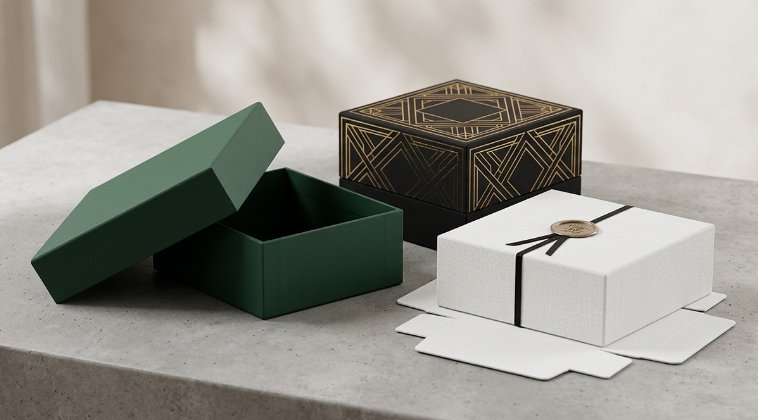
Choose the Window Structure and Board Combination
When choosing a window for your pack you should choose a format that matches the format of your paper. For example a Rigid Box could be made from greyboard of 1.0mm up to 3.0mm thickness and then wrapped in a cover paper, whereas a Folding Carton would be printed flat as a sheet to save space and to facilitate the folding of the carton. There are several points to consider when choosing a window such as the weight of the article, frequency of opening, presentation and shipment.
Discuss window material with supplier and approve samples physically. How is material attached? How is edge processed? Is the panel still transparent after die-cutting printed window and attaching board wrap with adhesive? A window should never be approved by viewing a picture of it on a screen. The printed colors, board wrap, adhesive line and transparent panel all influence the perception of pack quality and therefore all must be inspected.
Design the Insert Before the Window
A window can make movement visible, so we design the insert first and the decoration afterwards. Depending on the product in question and the visual effect we want to create, the insert can be made of EVA foam, of molded paper, of cardboard, of satin or of velvet. The main function of the insert is to hold the item in place, to control the contact points and to allow easy removal from the tray without pressure being exerted on the window or the box corners.
A fit check is particularly relevant for multi-piece gift sets and when checking every accessory and item in a tray. When checking a bottle or jar look at the neck, cap, base and label orientation. A small retail product may require a finger cut, a ribbon pull or even a secondary card to fit. The most useful fit sample is the actual product or a very good mock-up of the correct dimensions. A simple paper placeholder is not useful to test for friction, weight and tolerance etc.
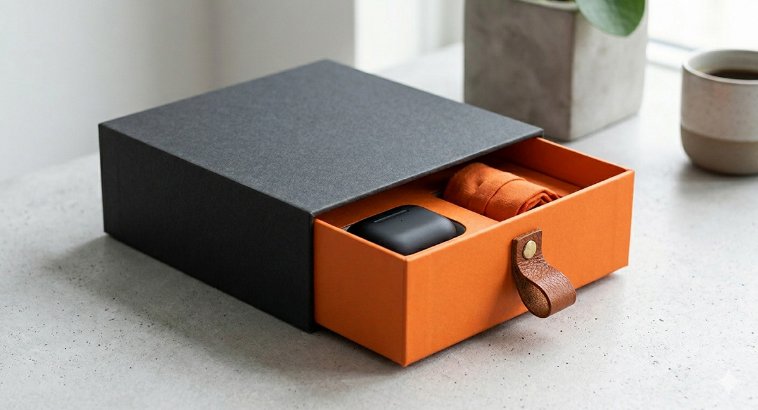
Ensure the viewing area is large enough to view the item’s feature that you designed the product display to highlight. Ensure there is sufficient material in the insert to support the item at its contact points. For multi-piece packages, position the viewing area to view the major feature that you would view first when looking at the package. Test fit the closed product display as well as removal of product from the package. An attractive viewing area is worthless if the product’s removal from the tray will damage the tray or product display.
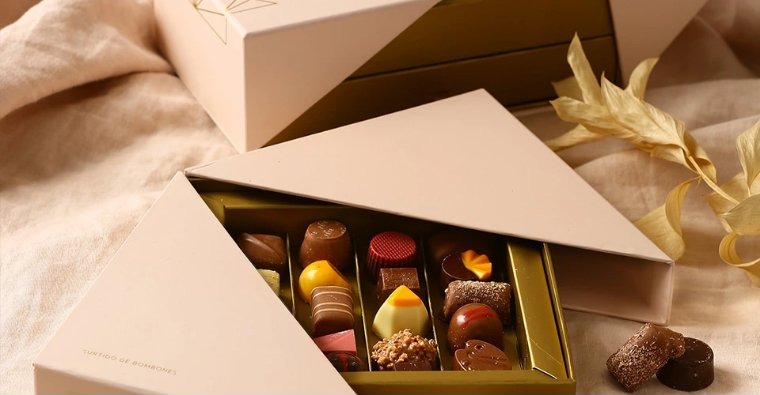
Match Printing and Finishing to What the Window Reveals
Transparent panels are usually quite visible so the printed area has to be visible enough against the product itself. The printing methods can be chosen to fit within a brand color code, with CMYK, Pantone, offset, digital printing and screen printing available. In addition to this, the paperboard around the window can be finished with a border of gold or silver foil or printed with the logo. Embossing and debossing can also be applied to the paperboard around the visible area. Other finishes for the paper surface include spot UV, soft-touch-lamination, matte-lamination or even gloss-lamination.
Use a finish proof test to assess the relationship between the printed panel and the product inside. A dark print will produce a clear sharp window, whilst a light or textured finish will create a softer cosmetic or gift look. Consider how the printed panel will be handled, particularly at edges, fold lines and opening points of the product and assess how the finish will look when the product is complete and assembled.
Build a Sampling and Quality Check Sequence
For custom window box packaging, Dr Box custom packaging projects can go through several approval points. The sampling process for a Dr Box custom packaging project can include white samples, printed samples, checking the packaging structure, transportation test samples and customer confirmation samples, depending on project requirements. The checks for custom window box packaging are outlined below.
1. Identify dimensions, weight, orientation, retail location, opening method and shipping route.
2. Approve dieline against real product for artwork approval.
3. Approve print, finish, assembly and shipping checks prior to release for production.
When Custom Window Box Packaging Is the Right Choice
A window box should be used where the product viewed through the packaging has enough value, color, quantity and arrangement to be of interest to the customer before it is opened. This type of packaging is particularly suitable for high-end retail displays, cosmetics, fragrances, accessories and gift sets. However, products that are light sensitive, prone to picking up dust and other materials or subject to excessive handling may be better packaged in a smaller window area or with the addition of a protective inner wrap to the outer box or as a closed form structure.
Dr Box is able to support the path from structure engineering & sampling through to printing, finishing, assembly and check of quality. The six people in the structural engineering department are constantly developing new structures as well as new packaging for products for Dr Box’s factory that carries out OEM and ODM production with minimum orders of between 300 to 1,000 units. The packaging engineering & sampling service allows for a technical check to be made on a project and for submission of details of a product such as dimensions, quantity required, artwork format and delivery time.
Conclusion
Treat the clear panel of your Custom Window Box Packaging as another solution for product fit / protection. Determine what you want your consumer to see. Choose a board / structure that reveals what you want them to see. Design your insert around the actual product. Verify color, finish, assembly and shipping prior to going into production. The clear window has a very specific role in your overall brand experience and should not be asked to do something else as well.
We would require you to forward the dimensions of the product, a reference to the artwork, preferred materials and quantity you wish to use for your custom packaging via the custom packaging enquiry. We can then suggest a suitable structure and suggest a sampling route to test your product in your target market.
FAQ
Q: What products suit custom window box packaging?
A: This type of packaging is particularly suited for products whose color and/or shape and/or arrangement and/or labeling allow customers to inspect the packaging before opening it. Examples are cosmetics, perfume accessories, gift sets and some articles sold in retail stores.
Q: Should the window or the insert be designed first?
A: Include product fit and insertion in the sample design as early as possible. Define the viewing window to the protected area of the product. Sample can be actual product or very accurate dummy.
Q: What board and insert materials are available?
A: The forms used in the Dr Box packaging are made from greyboard and art paper. Cardboard, molded paper, EVA foam, satin and velvet are used as insert components. The choice depends on the item to be presented in the packaging and on the presentation required.
Q: How long do sampling and production usually take?
A: Sampling time: 3-7 working days, Mass Production time: 15-30 working days. The production time will depend on product’s structure, product’s finish, quantity to be produced and approval time.