A custom gift box for several products needs an insert designed around the complete set: each item’s dimensions, weight, contact points, and removal path. Choose the layout before finalizing the outer box, then assess a physical sample with the actual contents. A neat arrangement is useful only if the items stay separated, the lid closes without pressure, and customers can remove each product comfortably.
We manufacture custom paper packaging, with the possibility of structural design and interior layout for beauty gift sets, corporate gift sets and promotional sets of luxury products. Our luxury rigid boxes are designed around the products in the set and we start with the complete set, not with a package size chosen for its appearance.
Start with the Products Inside the Box
Prepare a product list before requesting a quotation. Record each item’s maximum dimensions, packed weight, material, and supplied condition, including caps, sleeves, and individual cartons. A bottle measured without its closure gives an incomplete starting point; a fabric accessory may change shape when packed.
Decide which product will be the hero of your presentation and which products will need individual support. In the case of a skincare set for example, a glass bottle will likely require a different shaped pocket and height of support to a cream jar. A corporate gift kit may consist of a notebook, small accessory and printed card. Each item needs to be considered in terms of thickness and packing order.
The following checks can then be applied to the product list above to create a useable structural brief.
|
Design factor |
Decision to resolve before sampling |
|---|---|
|
Product variation |
Which dimensions may change between supplied batches? |
|
Separation |
Where could products touch during handling? |
|
Support |
Which surfaces can safely contact the insert? |
|
Removal |
Can your fingers reach the item without pulling the cap? |
|
Packing sequence |
Can the set be loaded without bending or forcing parts? |
Choosing Materials for Custom Gift Box Inserts
Dr Box supplies Paperboard, Molded Pulp and EVA Foam inserts, all of which can be compared on the basis of product fit, loading, presentation and the overall material system. The appearance of a material does not necessarily guarantee it will pass a particular transport test.
Paperboard Structures
Folded or die-cut paperboard can be used to create partitions, platforms and product pockets within gift boxes. If your products are of regular shape and you wish to include a paper interior to your gift boxes then this could be a feature worth evaluating. Check that the folds hold their shape and that adding one product will not disturb the compartment containing an adjacent product.
Molded Pulp Inserts
Molded pulp packaging creates shaped support areas around products. For multi-product packaging, it is necessary to assess the actual pocket dimensions, surface contact and removal ease. A paper-based insert can offer the necessary support for preferred materials, but all packaging components including coatings and linings must be assessed for overall recyclability and against local recycling facilities’ requirements.
EVA Foam and Decorative Linings
Cut pockets can be made in EVA foam to fit different shaped items. Check the depth of the pocket with the product to ensure it can be removed easily. The visible surface of a pocket can be changed with a satin or velvet lining but this does not change the underlying structure of the support.
Compare your prototypes against these criteria rather than choosing between different material names.
|
Insert option |
Evaluation focus |
Question for the sample review |
|---|---|---|
|
Paperboard |
Fold stability and separation |
Does the assembled insert stay seated? |
|
Molded pulp |
Pocket shape and contact areas |
Does each item sit securely and lift out easily? |
|
EVA foam |
Pocket fit and retention |
Is the grip suitable for both packing and removal? |
Plan Product Position and Easy Removal
A practical starting point is to place the largest or most difficult product to support first and then place the remaining products around it. Allow space for fingers, ribbons, cards and literature where required. Space is not wasted if it allows access to a product and stops customers from pulling a bottle by the neck of the bottle.
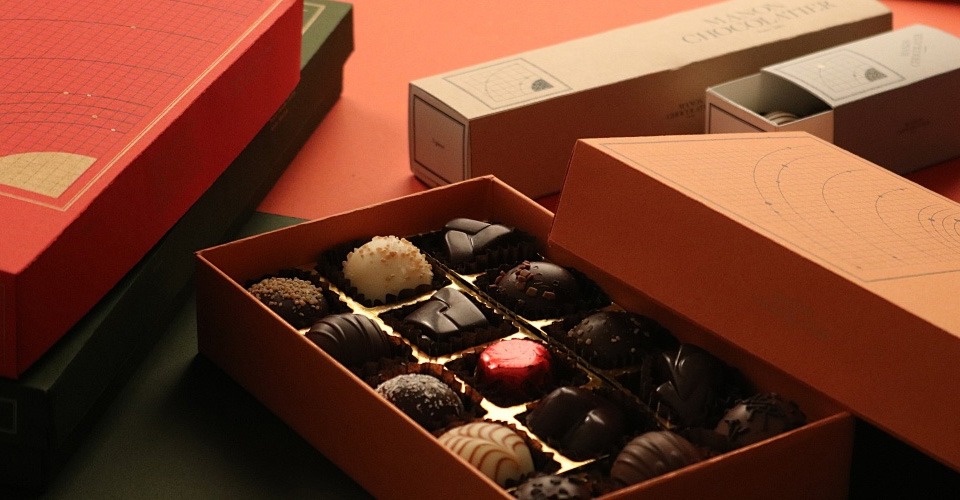
Check if neighboring glass containers will touch each other when the package is being handled. If it’s a promotional kit then it may need a card visible when opening but that card must not bar opening or come into contact with sensitive surfaces. These are issues for layout by sampling rather than being disappointed by a great looking design.
Get the person who is going to pack the order to review a complete, packed order in the correct sequence. See if any products have to be forced into pockets, if any products have to be lifted on top of adjacent products, or if any cards have to be repositioned. Even though a completed presentation may look complete and adequate, there are many potential problems with the order that can be revealed in this review before the completed presentation is finalized.
Keep your shared layouts up to date where the product range has changed. A similar replacement article to a bottle, such as a container, may weigh more, have a different shoulder profile or have a different height closure. Our packaging structural design support allows you to link these product details with the insert and outer structure prior to production approval.
Match the Insert to the Opening Structure
The opening motion of the box needs to be considered in relation to how the insert is to sit within the box. A lift-off lid allows access to the contents from above. A drawer would require the loaded tray to remain seated within the drawer as it is pulled outward. A magnetic or book style opening would require assessment of the lid clearance and how access is to be gained, not only initially but also near the hinge of the lid.
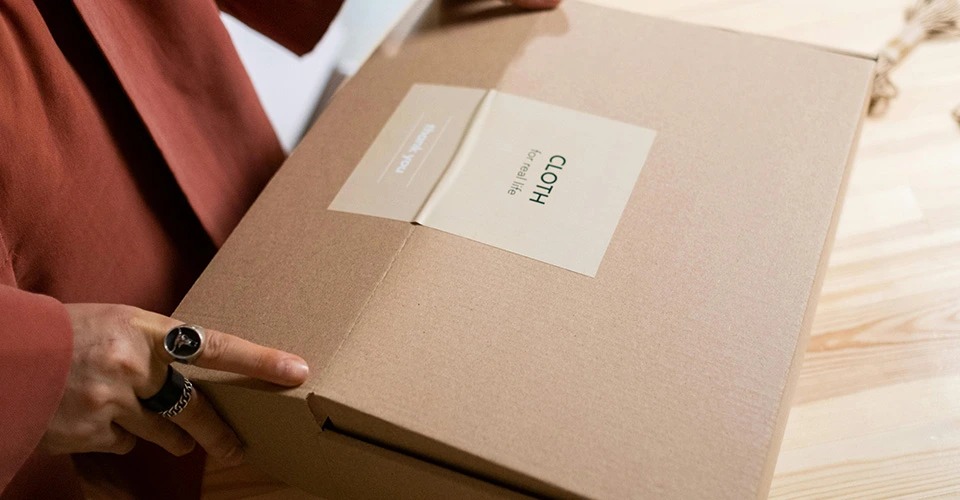
Test the complete package. An insert that fits into an open box may not work once all products, packaging materials and the information card have been added to the box. For luxury gift box packaging, test the closed package for contact with the lid and open and close the package a few times to check if the contents are still stacked in an orderly fashion.
Check Physical Samples Before Production
White structural samples allow us to check dimensions, arrangement and structural fit. Printed samples in addition to the appearance also show the possible finishing options. These must not be confused with digital proofs. A digital proof does not show how products fit together and how a loaded package looks like in real life.
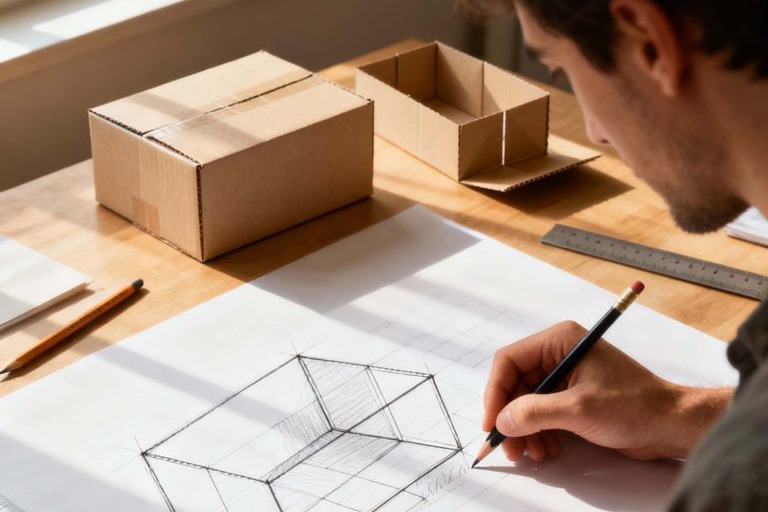
Check fit, removal, closure and loading of actual products. Check what transport evaluation and outer packaging for shipping is required for parcel post or overseas shipping of distribution. A presentation box and its insert are part of a packaging system and should be physically evaluated under appropriate shipping conditions to assess transport performance.
We record the finally accepted shape, material, article version and changes to the final article sample. The typical MOQ of Dr Box is 300-1000 pieces depending on shape and degree of customization. Sample production time: 3-7 working days. Production time for large quantities of articles: 15-30 working days, depending on the quantity and degree of customization. Additional time is required for any changes, for approval of the sample and for delivery.
Conclusion
When you want to bring product fit, product separation, ease of removal and the opening of your custom gift box together effectively, start with the complete product set. Compare suitable materials and approve the finished, loaded physical sample before proceeding to production.
Discuss your custom gift box project with Dr Box using product samples or dimensioned drawings, discussing the proposed product assortment, order quantity and delivery requirements to provide a practical starting point for the structural discussion.
FAQ
Q: Can different products share one insert?
A: Yes. One insert can hold many products. Each product must have a proper support area and adequate access for removal. Products that could damage each other must be separated. Check the complete loaded set of products even though each product fits individually in its pocket. The overall arrangement must work.
Q: Is paperboard better than EVA for gift box inserts?
A: Choice of packaging will depend on products, packaging presentation, packaging material requirements and packaging processes. When comparing paperboard structures with EVA pockets, content bearing samples must be compared in physical tests to assess content movement, content surface contact, content loading and content removal. While one packaging type may be stronger than another, more cost effective than another and better than another for use with particular products, there is no packaging material that is stronger, more cost effective and better than all others.
Q: Is a digital proof enough to approve the insert?
A: No. A digital proof can help review artwork or a proposed arrangement, but it cannot establish physical fit, retention, closure clearance, or removal comfort. Use an appropriate structural sample with the actual products. Review printed appearance separately when paper, color, and finishing are important to the final presentation.
Q: What should I send when requesting a quotation?
A: Provide the complete product list, dimensions, weights, quantities, preferred structure, material direction, and delivery requirements. Product samples or dimensioned drawings help clarify difficult shapes and contact areas. Also identify interchangeable assortments, printed cards, or wrapping, since these details can change the insert layout and the scope of sampling.